Sébastien Christophe
Un Petit Projet
Starting with a postage-stamp parcel in tiny Fyé, Sébastien Christophe has climbed to the command heights of Chablis.
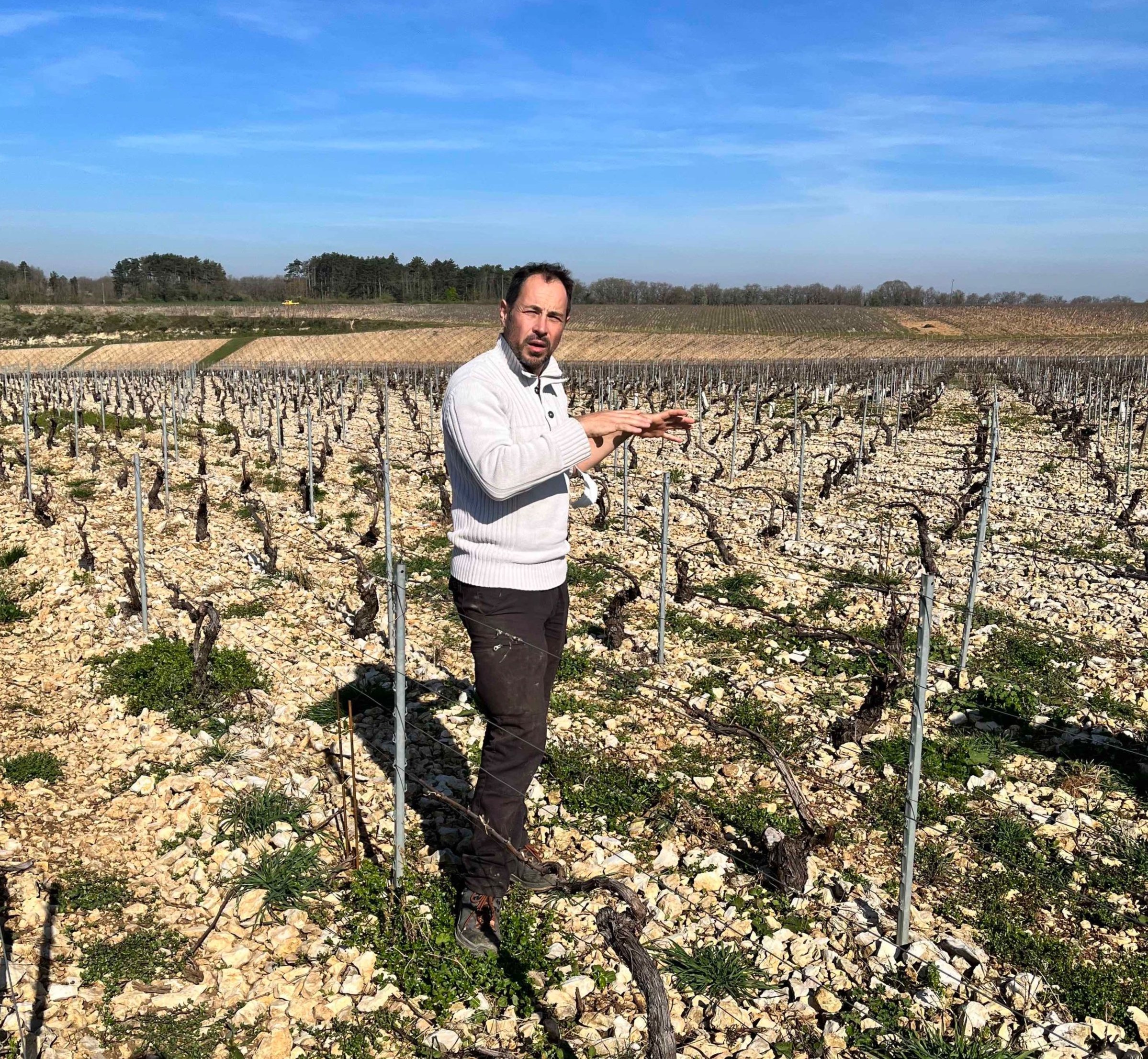
Sébastien Christophe is a hard guy to follow up a hill. Bouncing over Portlandian limestone scree and crumbly fist-sized clods bristling with ancient sea shells, the wiry winemaker has lost none of the restless energy that marked the beginning of his underdog story in Chablis. He talks as fast as he moves—and this is a man who has covered an unlikely amount of ground since striking out on his own from a family of cereal growers in 1999.
Scrambling to keep up with him on the west-facing slope of Montée de Tonnerre, whose 1er Cru vines face the Grand Cru Blanchot across the narrow Fyé valley where Sébastian grew up, it’s remarkable to reflect on how he came to scale the right bank of the Serein River. Domaine Christophe et Fils encompasses not only this prized site—whose afternoon sun exposure layers this long-living cuvée’s intensely saline, oyster-shell core with rich white orchard fruit—but a plot of Mont de Milieu in one direction and a south-facing parcel in Fourchaume’s Côte de Fontenay in the other. Add in his leases and grape contracts in Blanchot and Les Preuses—Grand Cru sites from which he extracts bracing, concentrated wines as dynamic as he is—and the genesis of it all seems even more unlikely.
Sébastien was 23 years old when he returned to Fyé after completing his winemaking education in Beaune. He inherited from his grandfather .6 hectares above Chablis’ Grand Cru slope, on a plateau mostly within the Petit Chablis designation where hardly anybody was cultivating vines. Working outward from a couple kernels of Chardonnay his grandfather had planted in the 1960s, Sébastien started clearing and planting—and entering en fermage agreements with family members who held more established parcels.
Starting out in the unsung appellation of Petit Chablis turned out to play to the energetic upstart’s strengths. The softer soils of right-bank Petit Chablis imparted a counterbalancing richness that the rest of the appellation (whose acreage resides mostly in the further reaches of the left bank, where the wines are sharper) tended to lack. And he was captivated by the subtle geological layering that was evident as he descended toward the Grand Cru slope, as Portlandian soil transitioned into pure Kimmeridgian. Soon he was farming sites with all kinds of different exposures, and every vintage felt like a controlled experiment—at least as controllable as an experiment can be given Chablis’ wild-card weather.
Now, with some 30 hectares under his supervision, that exquisitely focused attention has the broad canvas it deserves. His wine-making ethos is in tune with the area’s younger generation but hardly iconoclastic. He mostly relies on stainless steel to channel the freshness and vibrancy that remain bywords of Chablis (even as a warming climate has produced an uptick of richness—along with increasingly nerve-wracking spells of frost and hail), but he uses a bit of neutral oak as well, and his wines undergo full malolactic conversion. Yet Sébastien is so committed to vinifying different subplots based on their soil characteristics that he’ll have as many as a dozen distinct vats even within the same cuvée.
And perhaps that’s the secret to the transparent immediacy of his wines. The south and southwest exposure of his 1er Cru Mont de Milieu delivers powerfully ripe fruit within the pure, elegant frame provided by that site’s highly mineral soils. His 1er Cru Fourchaume conveys the easygoing fruit of that warm but windy microclimate, which naturally yields less structured wines, so he vinifies entirely in stainless steel to emphasize its freshness. His Grand Cru Les Preuses marries delicate aromatics with almost voluptuous elegance, while the GC Blanchot, which wraps around the hill to have a southeast aspect, is a study in fleet-footed acidity and tart citrus. Across the range, Sébastien channels the full spectrum of Chablis with laser precision. And he has a native son’s intimate knowledge of the land. His entry-level Chablis Villages comes from plots squeezed in between 1er Cru Montée de Tonnerre and Grand Cru Blanchot—so it’s no wonder it punches above its weight. The Chablis Vielles Vignes, meanwhile, derives from 60+ year-old vines in Fontenay-près-Chablis: a north-facing parcel and a south-facing one that come together to produce wines whose dense core seems to vibrate with energy. Depending on the vintage, it has a ceiling every bit as high as his 1er Cru wines.
And just to show that he has his grandfather to thank for more than some of those old vines, Sébastien has recently redoubled his efforts in the place where it all began: the high bench in Petit Chablis north of Chablis and west of Fyé. This cuvée may be the “least noble” constituent of his portfolio, but its flinty, herb-flecked entry leads into depths that are the envy of an appellation whose reputation is on the rise—thanks in no small part to this dynamic scion of cereal-farming Chablisiennes.
wines
Varietal/Blend
Chardonnay
Vineyard Area
Mostly from 20-year-old vines and some older plantings dating back to the 1960s — situated behind the Grand cru slope and Premier crus of the Serein river’s right bank (some flat and steep sections)
Soil
Portlandian limestone
Elevation
600-800 feet
Exposure
Various orientations
Vinification
Manual harvest, fermented with wild yeasts and aged entirely in stainless steel tanks, with full malolactic fermentation and possible bâtonnage depending on the vintage.
Maturation
7-8 months in stainless steel
Marketing Materials:
Labels + -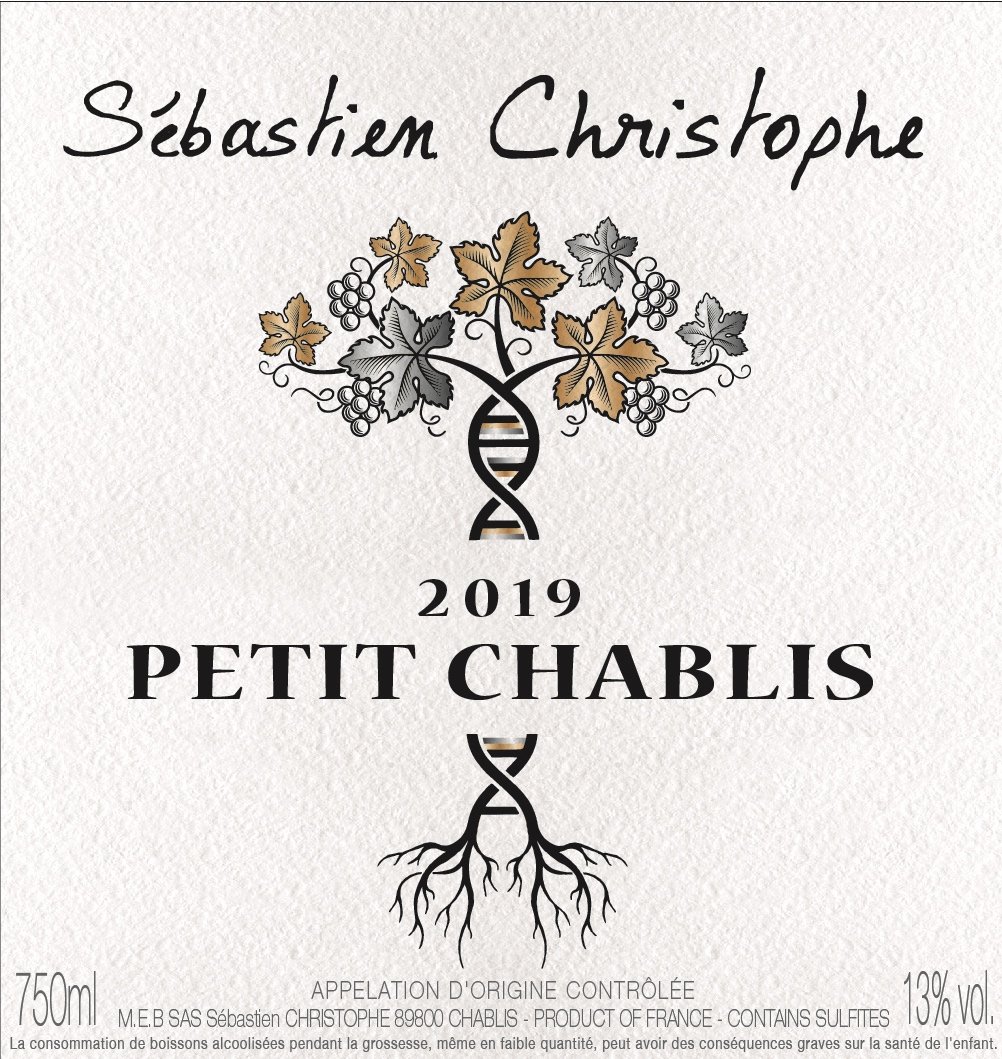
Varietal/Blend
Chardonnay
Vineyard Area
From vines planted between 1980 and 2000 of varying grades and exposure facing Grand Cru Les Blanchots and west of Montée de Tonnerre.
Soil
Kimmeridgian limestone marl
Elevation
120-180 meters
Exposure
Various orientations
Vinification
Manual harvest, pressed, settled and racked before 1- to 2-month fermentation in stainless steel. Full malolactic and bâtonnage may be employed in colder vintages.
Maturation
7-8 months in stainless steel
Marketing Materials:
Labels + -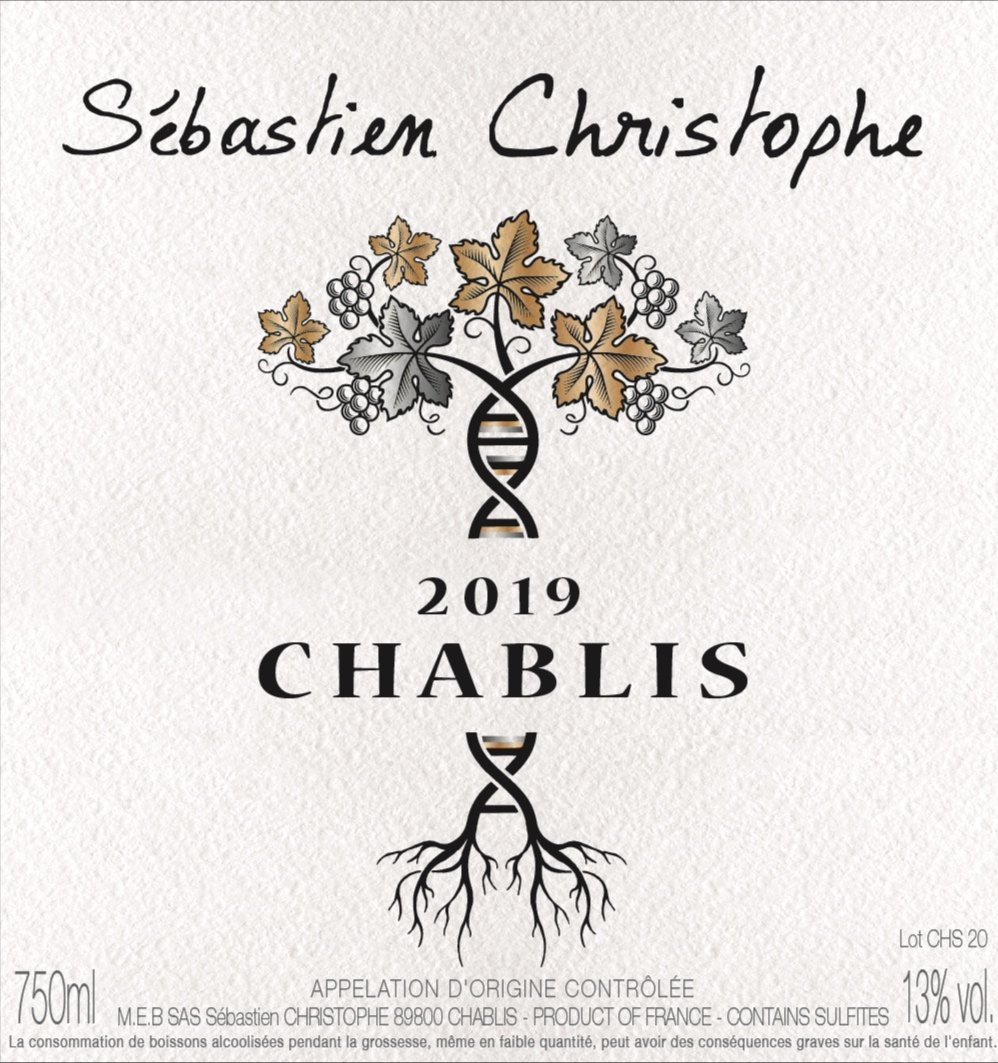
Varietal/Blend
Chardonnay
Vineyard Area
From two plots planted in 1959 by Christophe’s grandfather in Fontenay-Près-Chablis. The first is situated above 1er Cru Côte de Fontenay and the other is situated on the village eastern side.
Soil
Kimmeridgian limestone marl
Elevation
150 feet
Exposure
West, North
Vinification
Hand-harvested and wild yeast-fermented in mostly stainless steel though a smaller portion is fermented in old 228-liter oak barrels with full malolactic conversion.
Maturation
12 months — 90% in stainless steel and 10% in oak barrels of five or more previous wines
Marketing Materials:
Labels + -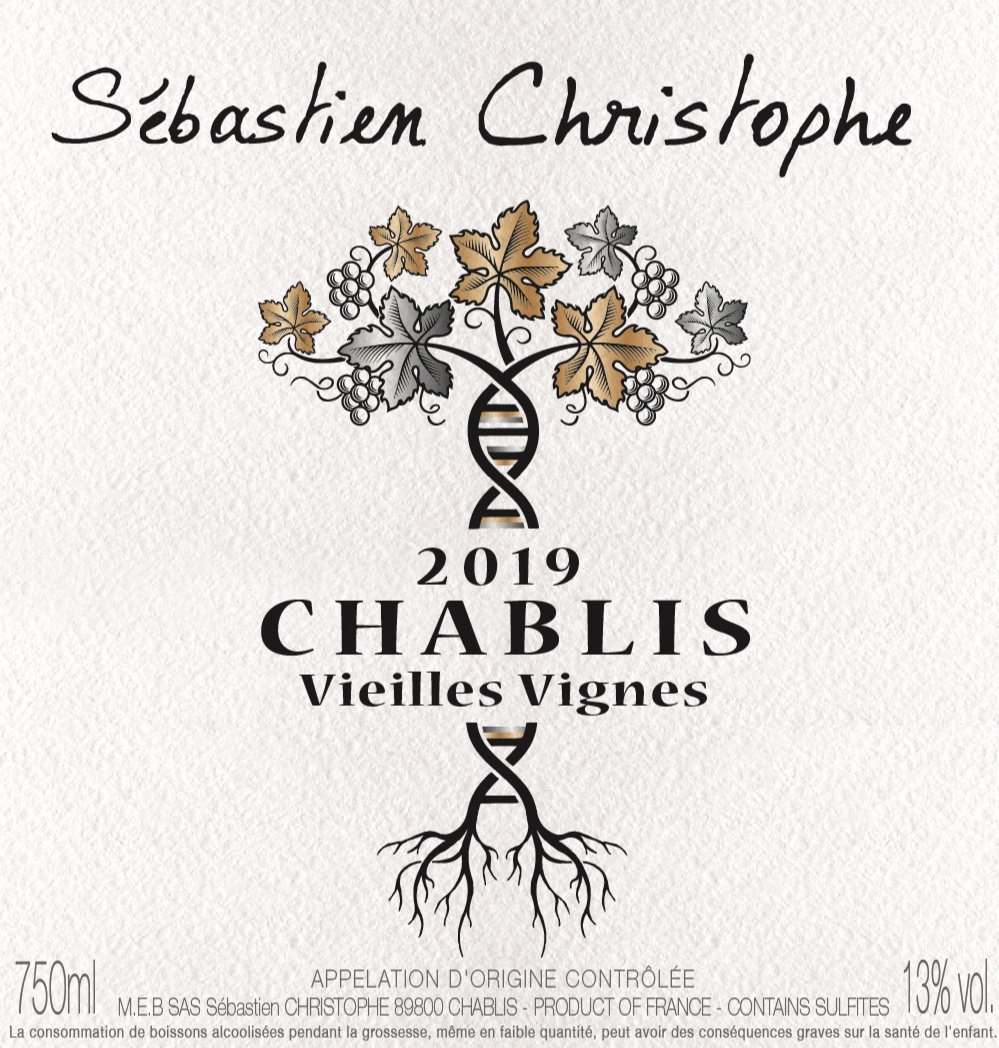
Varietal/Blend
Chardonnay
Vineyard Area
Christophe's parcel was planted in 1981 on the south-facing Côte de Fontenay within the greater 1er cru of Fourchaume.
Soil
Kimmeridgian limestone below complex Portlandian clay-limestone conglomerates and rounded stones.
Elevation
120 meters
Exposure
South
Vinification
Manual harvest and fermented with wild yeasts (allowing a full malolactic fermentation) in a combination of 80% stainless steel and the remaining in 228-liter oak barrels, of which very little is new. In colder vintages, there might be some battonage but only on the wine aged in steel tanks.
Maturation
12 months — 80% in stainless steel and 20% in oak barrels from new to three previous wines
Marketing Materials:
Labels + -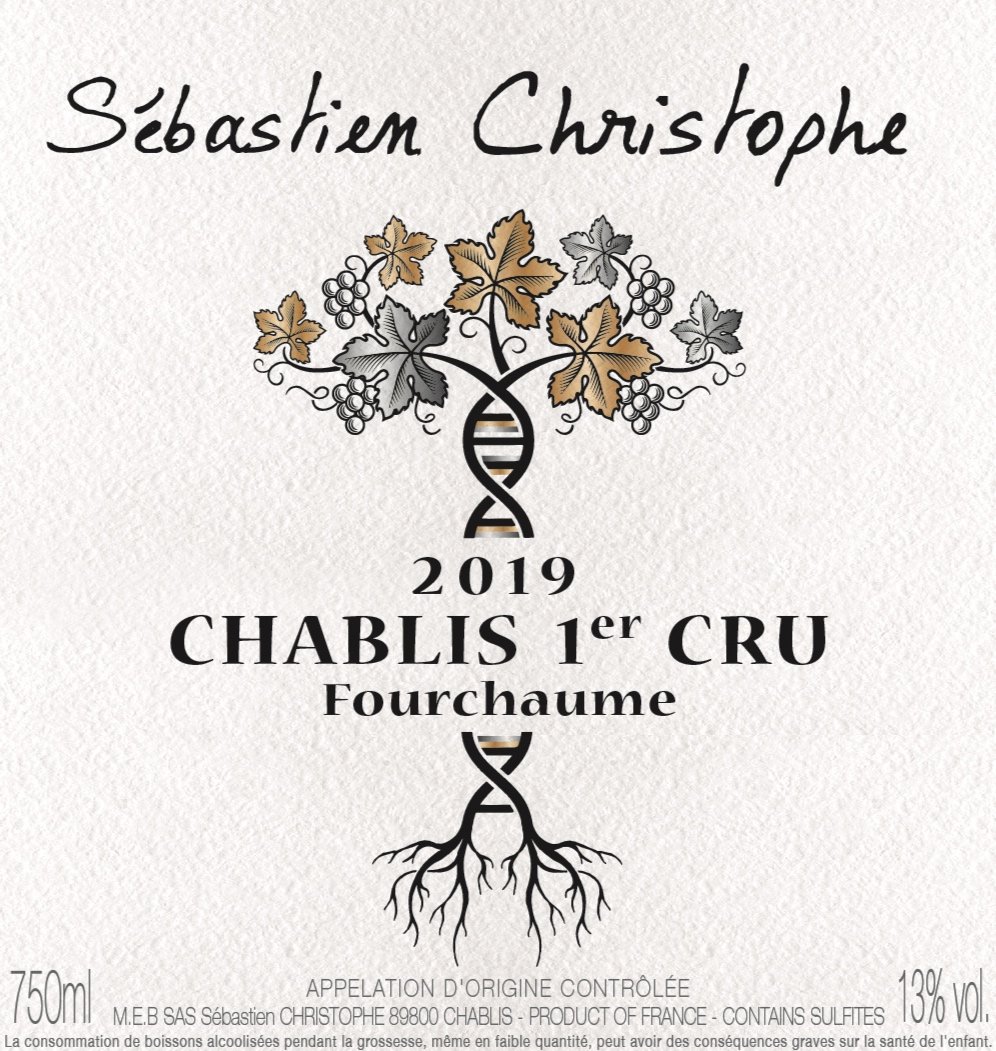
Varietal/Blend
Chardonnay
Vineyard Area
From vines planted in the 1980s on a moderately steep slope just east of the town of Chablis
Soil
Kimmeridgian limestone marl subsoil (limestone-rich clay) with a rocky top layer from the Portlandian era
Elevation
180 meters
Exposure
Varying south-facing
Vinification
Manual harvest, fermented with wild yeasts (allowing a full malolactic fermentation) in a combination of 80% stainless steel and the remaining in 228-liter oak barrels, of which very little is new. In colder vintages, there might be some battonage but only on the wine aged in steel tanks.
Maturation
12 months — 80% in stainless steel and 20% in oak barrels from new to three previous wines
Marketing Materials:
Labels + -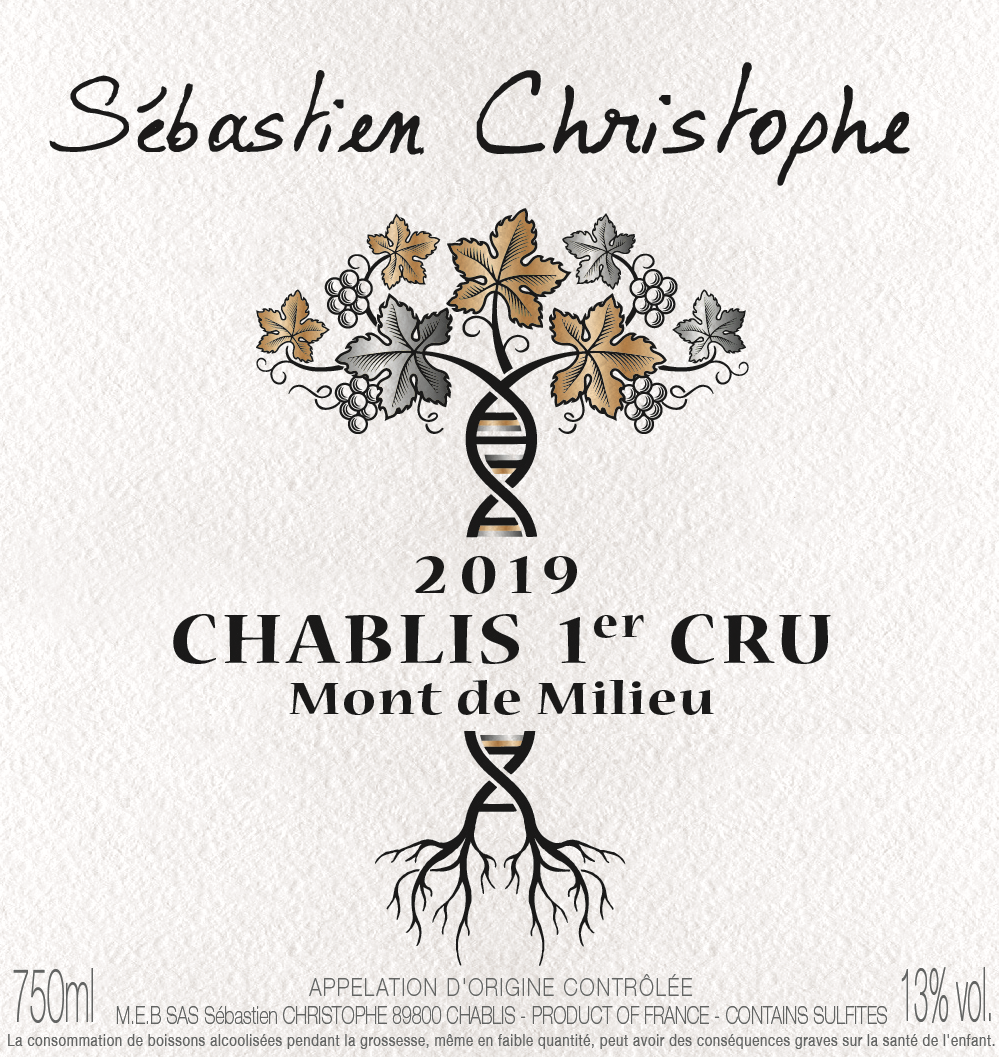
Varietal/Blend
Chardonnay
Vineyard Area
From vines planted in the 1980s on a slope east of the town of Chablis
Soil
Kimmeridgian limestone marl
Elevation
200 meters
Exposure
West
Vinification
Manual harvest, fermented with wild yeasts (allowing a full malolactic fermentation) in a combination of 80% stainless steel and the remaining in 228-liter oak barrels, of which very little is new. In colder vintages, some battonage may be employed but only on the wine aged steel tanks.
Maturation
12 months — 80% in stainless steel and 20% in oak barrels from new to three previous wines
Varietal/Blend
Chardonnay
Vineyard Area
The hillside of Blanchot is situated east of Chablis (the southernmost Grand Cru of the appellation) — vines are 20 years old.
Soil
Poor, Kimmeridgian limestone and white clay
Elevation
500-700 feet
Exposure
Southeast
Vinification
Manual harvest, fermented with wild yeasts (allowing a full malolactic fermentation) in a combination of stainless steel and 228-liter oak barrels, of which very little is new. In colder vintages, there might be some bâttonage, but only on the wine aged in steel tanks.
Marketing Materials:
Labels + -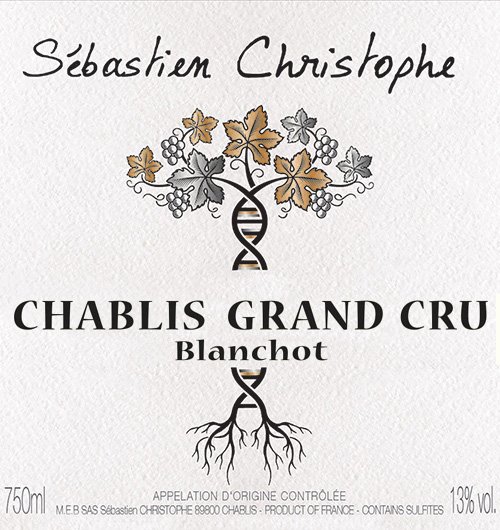
Varietal/Blend
Chardonnay
Vineyard Area
Les Preuses is situated on the western end of the Grand Cru slope and benefits from excellent sunshine through growing season.
Soil
Mixtures of relatively deep clay marl and chalk over Kimmeridgian limestone bedrock
Elevation
190 meters
Exposure
Southwest
Vinification
Manual harvest, fermented with wild yeasts (allowing a full malolactic fermentation) in a combination of stainless steel and 228-liter oak barrels, of which very little is new. In colder vintages, there might be some bâttonage, but only on the wine aged in steel tanks.