Henri Germain et Fils
Côte de Beaune
Jean-François Germain
1973
9 hectares
Organic (including Biodynamic principles)
Casual Meursault Magic
Domaine Henri Germain & Fils could only fly under the radar for so long before the treasure-seekers caught on.
The first time we met the Germain family, back around 2000 and well before their rise to critical-darling status in Burgundy, it was almost like they were doing everything in their power to evade detection, let alone acclaim. Their modest home in Meursault was enclosed by a stacked-stone wall covered in moss. Weeds sprouted up through the cracks, and a gravel drive bisected a couple dozen short rows of vines in their backyard. The impression was nearly of a hobbyist sitting on just enough Chardonnay to throw a party at season’s end—and when we got inside we were greeted not by the proprietor, Jean-François Germain, but instead by his mother. She sat us at the kitchen table, talked a bit, in her lovely manner, and sent us on our way.
A day or two later we mentioned the encounter to their inestimable Meursault neighbor Robert Ampeau. Robert, a legend of hard-working humility and uncompromising standards, perked up. “They tend their vines as we tend ours,” he exclaimed, “but better!”
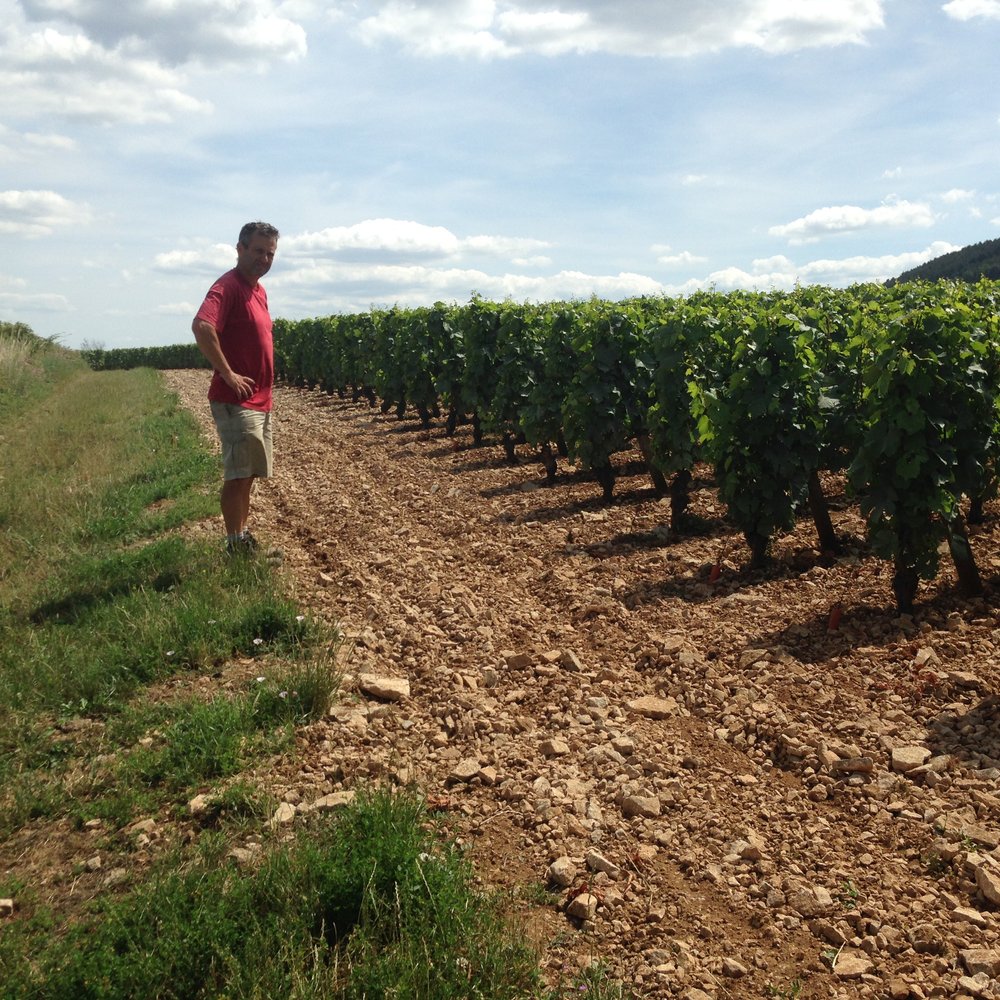
In marked contrast to so many other farmers on the Côte de Beaune, who hedged their vines so aggressively that nearly every vintage required chaptalization to make up for the delayed ripening, Jean-François Germain preferred to let the canopies flourish and work twice as hard to manage them. And when the impeccable, phenolically ripe fruit hit Germain’s frigid cellar, where fermentation progressed at a glacial pace, the results were revelatory.
So they remain today at this domaine, where Henri Germain began estate-bottling a small parcel in Meursault Charmes in 1973. The holdings expanded when Henri married Paulette Pillot, who’d inherited vineyards in Chassagne-Montrachet, including an exceptional Premier Cru parcel in the sub-climat of Fairendes in Morgeot. In time the reins passed to their son Jean-François, whose marriage to Sophie Jobard (another important Meursault name) brought a large Premier Cru plot in Meursault-Poruzot.
No parcel is more precious than Perrières, which would undoubtedly be a Grand Cru if the village had one: Germain’s .16 hectares were planted in the 1950s on its thin, rocky limestone. The family’s holdings in Charmes and Poruzots are primarily situated in the upper-middle sections, whose shallow soils are the most sought-after. Nine white cuvées benefit from considerable diversity of terroir. Through the middle of the range, a Meursault Limozin, whose vines were planted in the late 1930s on silty clay-limestone, shows off the village’s riper fruit intensity and depth; a northeast-facing Meursault-Chevalières pitched a bit higher up atop hard limestone hums like a live wire; and the nutty Les Fairendes has a creamy texture lifted by a nervy and precise finish that remains a signature element across the entire Henri Germain lineup.
The reds also present focused expressions of distinctive sites. Meursault Clos des Mouches, a monopole planted in 1949 within spitting distance of Volnay, is ideally suited to Pinot Noir. A handsome parcel in Beaune Bressandes, planted in the 1960s on heavier brown clay, produces a darker, brinier bottling. And Germain’s latest acquisition, .6 hectares of 50-year-old Pinot Noir vines rooted in alluvial gravel over limestone in Premier Cru Savigny-lès-Beaune Aux Gravains, yields an exceptionally fine, lifted, mineral-driven red.
Jean-François exudes a low-key confidence in the cellar, flashing a charmingly timid smile when we barrel-taste together and deflecting our praise with a casual, rest-easy giggle. He makes wine with an extremely gentle touch and enviable patience, content to let fermentation take as long as it needs—which is long indeed in that frosty cellar—knowing that the real work happens in the vineyard, where organic methods, hand-harvesting, and low yields rule. The wines spend two winters on the lees in barrels (containing up to 30 percent new oak depending on the cuvée and vintage), without racking or bâtonnage. Malolactic conversion often comes late. It all results in naturally refined whites whose vivid and vibrant fruit is galvanized by crackling limestone acidity, and silken reds that express vintage and terroir with terrific transparency.
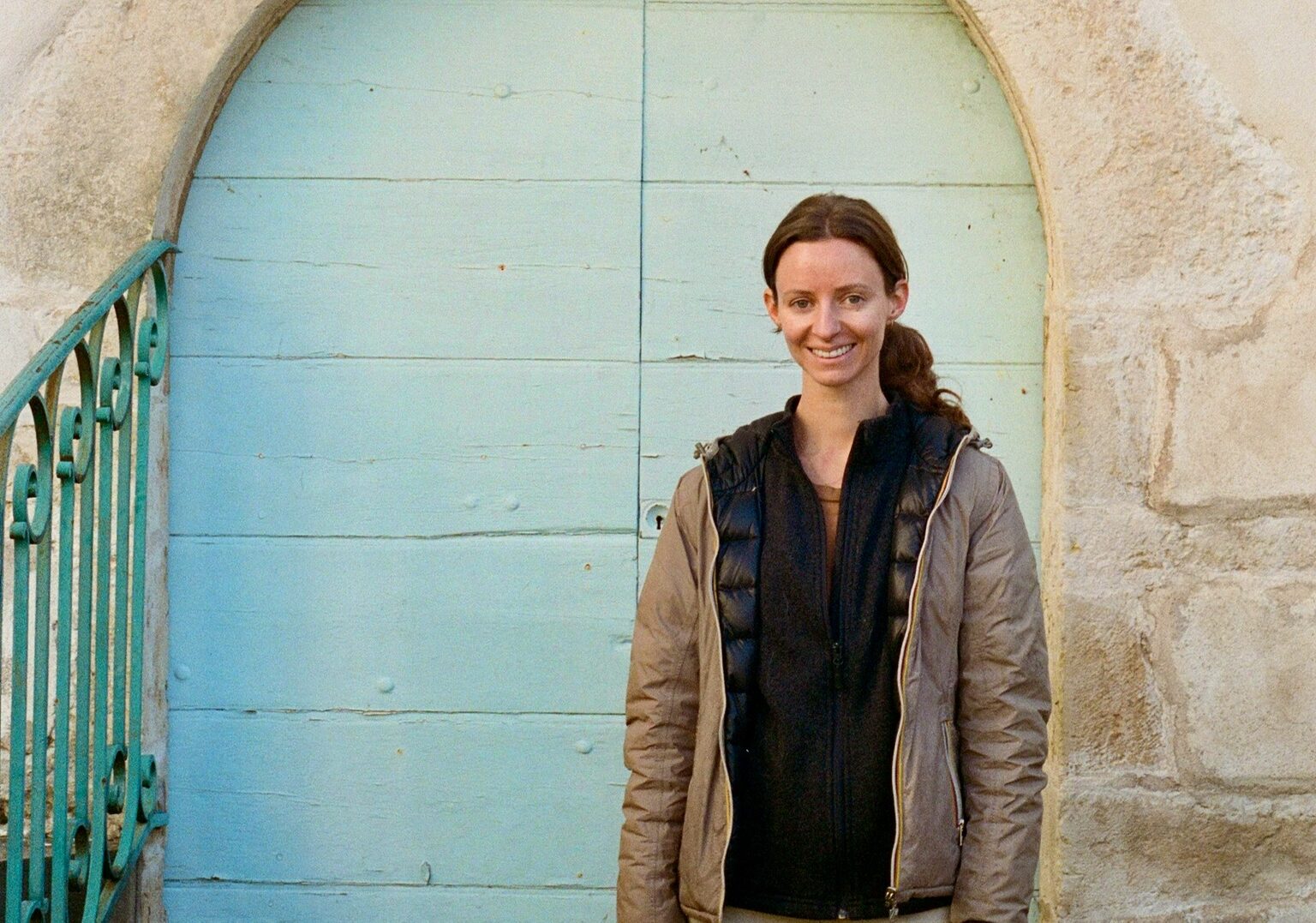
Since 2018 Jean-François has been working with his daughter Lucie. She has an open face and bright smile that reflect her mother, an easygoing demeanor that matches her dad’s, and a pensive, adventurous intelligence that’s all her own. They work hard and humbly, and still focus on the vineyards rather than attracting attention to themselves.
But the excellence that was apparent to us and Robert Ampeau a quarter-century ago has very much caught up with them. Allocations are tiny and there’s never enough to go around. Jean-François and Lucie’s blossoming partnership exemplifies the deceptively simple sophistication that has catapulted this domaine onto the wish lists of artisan-seeking buyers and collectors around the world almost entirely by word-of-mouth over the past 10 or 15 years. The source of their success remains the same: They let the sites do the talking, embracing their incredible depth and richness with laissez-faire vinification that gilds each cuvée with elegance and refinement. These patiently made wines also reward patient drinkers. They’re lush and unabashedly full-fruited, vintage permitting, but penetratingly incisive, with firm structural bones that are resilient to decades in the cellar.
We can’t wait to see what the next decade brings for this domaine. Years after sitting at the kitchen table with Paulette Pillot, now we watch her granddaughter Lucie bob around the village in a little old hatchback with Jean-François at her side in the passenger seat. The estate has gone from strength to strength in that time, and the wines are only getting better.
wines
Varietal/Blend
Aligoté
Vineyard Area
The Aligoté is drawn from a single plot on lower part of Meursault—vines were planted in 1977.
Soil
Clay-limestone
Elevation
230 meters
Exposure
Southeast
Vinification
Manual harvest, no added yeasts or enzymes, very rarely any bâtonnage or racking, cold and very slow fermentations (late-occurring malolactic conversion)
Maturation
12 months in older barrels followed by a 4-month refinement in tank, fined and filtered only if necessary
Marketing Materials:
Labels + -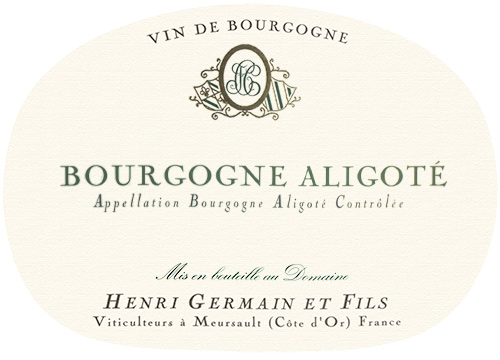
Varietal/Blend
Chardonnay
Vineyard Area
The Bourgogne Côte d'Or is drawn from five different plots (four in Meursault and one in Chassagne) amounting to 1 hectare. In Meursault, they are "Les Lameroses", "Les Pacriots", "Les Belles Côtes", "Les Herbeaux" and "Au Jardin." In Chassagn-Montrachet, it is "Les Grandes Corvées."
Soil
Clay-limestone
Elevation
220-240 meters
Exposure
East - Southeast
Vinification
Manual harvest, no added yeasts or enzymes, very rarely any bâtonnage, no racking, cold and very slow fermentations (late-occurring malolactic conversion)
Maturation
12 months in barrels of previous wines, fined and filtered only when necessary
Marketing Materials:
Labels + -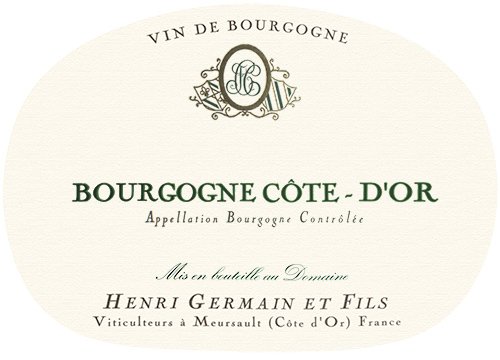
Varietal/Blend
Chardonnay
Vineyard Area
The climat of Morgeot is located on the main road towards the middle of the appellation and just below 1er Cru Cailleret. Les Fairendes is the highest section of Morgeot over the road that separates the top from the bottom. Germain's holding comprises .5 hectare.
Soil
Very poor white, limestone-based soils
Elevation
250 meters
Exposure
East
Vinification
Manual harvest, no added yeasts or enzymes, no racking, cold and very slow fermentations (late-occurring Malo)
Maturation
22 months (20-30% new oak), fined and filtered only when necessary
Marketing Materials:
Labels + -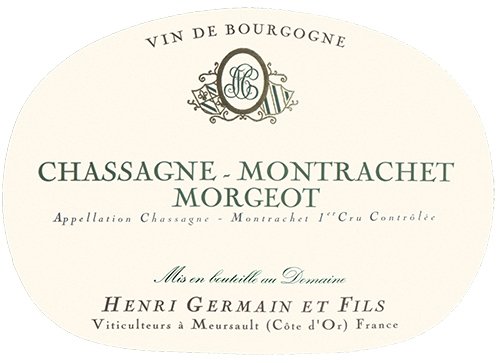
Varietal/Blend
Chardonnay
Vineyard Area
The Meursault is drawn from the lieux-dits of Clos du Cromin, Les Dressoles, Les Pellans, La Barre, Les Vireuils, Les Corbins and Moulin Judas (just over one hectare altogether)—vines were planted in the 1950s
Soil
Limestone-based with silt and clay depending on the site
Exposure
East/Southeast/South
Vinification
Manual harvest, no added yeasts or enzymes, very rarely any bâtonnage, cold and very slow fermentation (late-occurring Malo)
Maturation
18 months (20-25% new oak), fined and filtered only when necessary
Marketing Materials:
Labels + -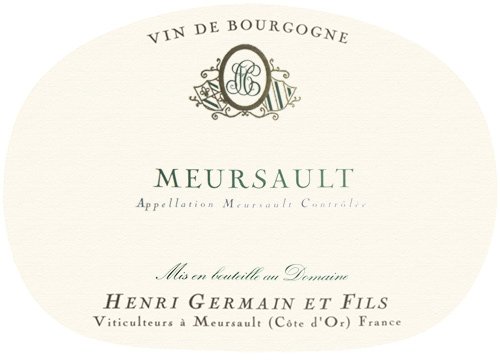
Varietal/Blend
Chardonnay
Vineyard Area
Chevalières is located on the northern side of the Meursault appellation (just above the village).
Soil
Very thin and rocky limestone soils very similar to those of Perrières.
Elevation
270 meters
Exposure
Northeast
Vinification
Manual harvest, no added yeasts or enzymes, very rarely any bâtonnage, no racking, cold and very slow fermentations (late-occurring Malo)
Maturation
18 months (20-30% new oak), fined and filtered only when necessary
Marketing Materials:
Labels + -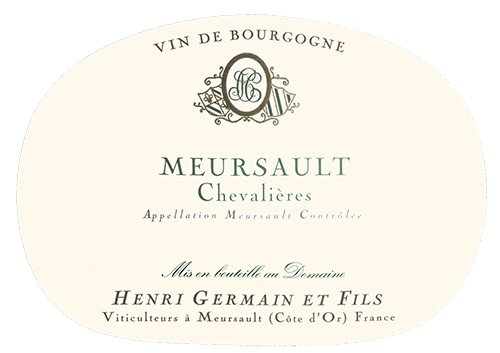
Varietal/Blend
Chardonnay
Vineyard Area
Limozin sits just below the 1er Crus of Genevrières and Poruzots and is next to 1er Cru Charmes — vines were planted in the late 1930s.
Soil
Silty clay-limestone
Elevation
230-240 meters
Exposure
Southeast
Vinification
Manual harvest, no added yeasts or enzymes, very rarely any bâtonnage, cold and very slow fermentations (late-occurring Malo)
Maturation
18 months (20-25% new oak), fined and filtered only when necessary
Marketing Materials:
Labels + -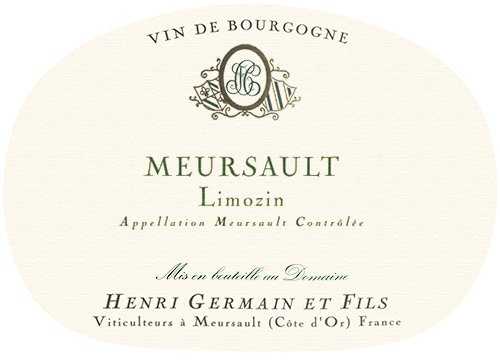
Varietal/Blend
Chardonnay
Vineyard Area
Charmes is located below Perrières and is adjacent to Puligny-Montrachet Les Combettes. Of Germain's six plots, most are located in the top section ("Charmes Desssus") that abuts Puligny-Montrachet Les Combettes. The vines were replanted in the 1980s. Germain's holding comprises .6 hectares.
Soil
Limestone and marl
Elevation
250-260 meters
Exposure
South - Southeast
Vinification
Manual harvest, no added yeasts or enzymes, very rarely any bâtonnage, cold and very slow fermentations (late-occurring Malo)
Maturation
22 months (20-30% new oak), fined and filtered only when necessary
Marketing Materials:
Labels + -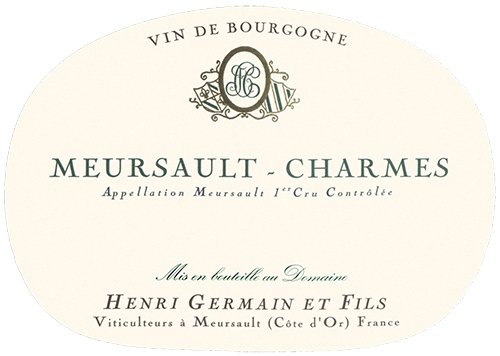
Varietal/Blend
Chardonnay
Vineyard Area
Germain's .25 hectares of vines in Poruzots are situated just under Narvaux in upper section ("Les Poruzots Dessus"). These vines were replanted in the 1980s.
Soil
Clay over hard limestone at 30cm below the surface
Elevation
260 meters
Exposure
South - Southeast
Vinification
Manual harvest, no added yeasts or enzymes, very rarely any bâtonnage, no racking, cold and very slow fermentations (late-occurring Malo)
Maturation
22 months (20-30% new oak), fined and filtered only when necessary
Marketing Materials:
Labels + -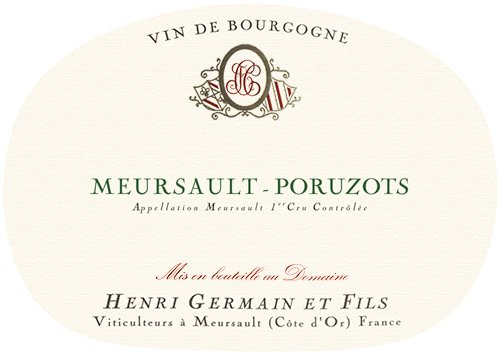
Varietal/Blend
Chardonnay
Vineyard Area
From a .16-hectare parcel acquired in 20002 above 1er Cru Charmes and next to 1er Cru Puligy-Montrachet Les Chalumeaux — vines were planted in the 1950s.
Soil
Very thin and rocky limestone soils
Elevation
270 meters
Exposure
Southeast
Vinification
Manual harvest, no added yeasts or enzymes, very rarely any bâtonnage, no racking, cold and very slow fermentations (late-occurring Malo)
Maturation
22 months (20-30% new oak), fined and filtered only when necessary
Marketing Materials:
Labels + -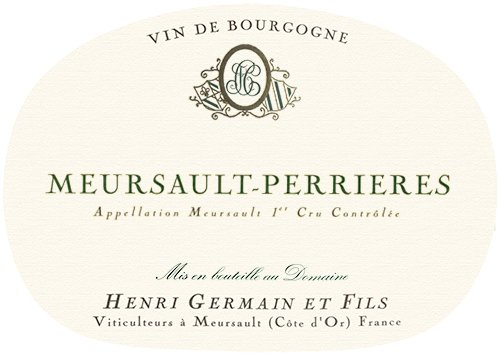
Varietal/Blend
Pinot Noir
Vineyard Area
From two parcels, the first is located in around the Germain's house in Meursault called "Au Jardin" and the second is called "Au Moulin Judas", which is near the border of Volnay.
Soil
Clay-limestone
Elevation
240 meters
Exposure
East - Southeast
Vinification
Manual harvest, no added yeasts or enzymes, very rarely any bâtonnage, no racking, cold and very slow fermentations (late-occurring Malo)
Maturation
13+ months (20-25% new oak), fined and filtered only when necessary
Marketing Materials:
Labels + -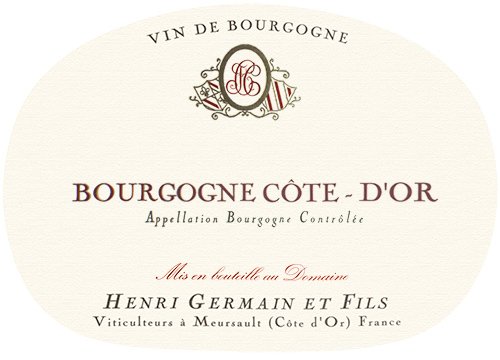
Varietal/Blend
Pinot Noir
Vineyard Area
Les Bressandes is positioned on the northern end of the appellation on a steep—vines were planted between 1960-1965. Germain's parcel comprises 1.25 hectares.
Soil
Brown clay with some gravel
Elevation
275 meters
Exposure
East-Southeast
Vinification
Manual harvest, no added yeasts or enzymes, cold and very slow fermentations in stainless steel (late-occurring malolactic fermentation.
Maturation
22 months (20-30% new oak), fined and filtered only when necessary
Marketing Materials:
Labels + -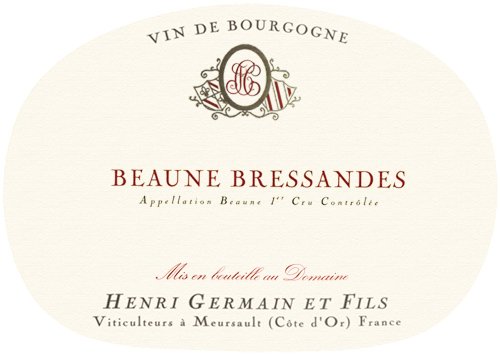
Varietal/Blend
Pinot Noir
Vineyard Area
The Chassagne Rouge comes from gently sloped vines in Les Battaudes near Santenay (first planted in 1951 in cordon royat).
Soil
Deep clay-limestone soils
Elevation
225 meters
Exposure
Southeast
Vinification
Manual harvest, no added yeasts or enzymes, cold and very slow fermentations (late-occurring Malo)
Maturation
18 months in barrels of previous wines, fined and filtered only when necessary
Marketing Materials:
Labels + -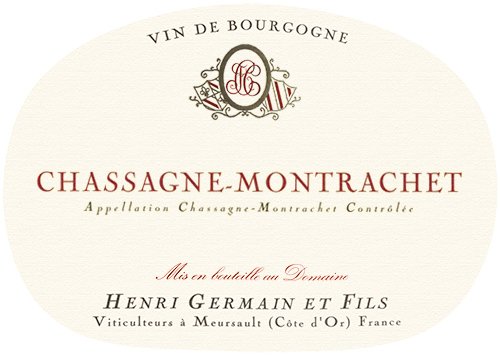
Varietal/Blend
Pinot Noir
Vineyard Area
From a .5-hectare parcel near the border of Volnay — vines were planted in 1949.
Soil
Limestone with marl and notably more iron in the soil than surrounding Meursault terroirs
Elevation
240 meters
Exposure
East
Vinification
Manual harvest, no added yeasts or enzymes, no racking, cold and very slow fermentations (late-occurring malolactic fermentation)
Maturation
18 months (very little new oak),fined and filtered only when necessary no fining or filtration
Marketing Materials:
Labels + -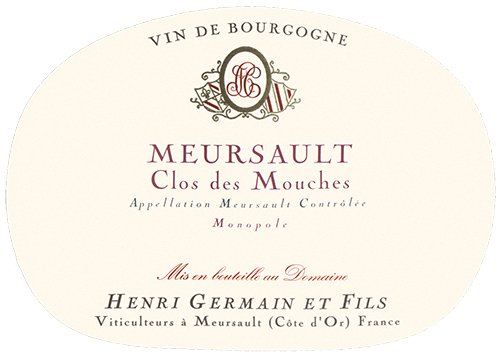
Varietal/Blend
Pinot Noir
Vineyard Area
Aux Gravains is located between Lavières and Les Sepentières on gently sloped terrain. Germain's .6 hectares was planted in 1976.
Soil
Deep limestone-based soils of alluvial composition, consisting of some clay, sand and rounded gravel deposited by the Rhoin river.
Elevation
260-270 meters
Exposure
South
Vinification
Manual harvest, no added yeasts or enzymes, no racking, cold and very slow fermentations in stainless steel (late-occurring malolactic fermentation)
Maturation
22 months (20-30% new oak), fined and filtered only when necessary
Domaine Henri Germain et Fils
Germain Henri et Fils Domaine, Rue du Moulin Judas, Meursault, France
Meursault Chevalières
XQJ6+87 Meursault, France
•Chardonnay
Meursault-Perrières 1er Cru
Meursault - Les Perrieres, Meursault, France
•Chardonnay
Meursault-Poruzots 1er Cru
XQ85+WC Meursault, France
•Chardonnay
Meursault Limozin
XQ76+Q8 Meursault, France
•Chardonnay
Meursault Clos de Mouches Monopole
XQMG+WW Meursault, France
•Pinot Noir
Meursault-Charmes 1er Cru
XQ53+MG Meursault, France
•Chardonnay
Beaune Bressandes 1er Cru
2RRC+HR Beaune, France
•Pinot Noir
Chassagne-Montrachet Morgeot 1er Les Fairendes
1 Rue du Ham. de Morgeot, 21190 Chassagne-Montrachet, France
•Chardonnay
Meursault Les Dressoles
XQMH+5G Meursault, France
•One of three lieux that goes into Germain's Meursault •Chardonnay
Meursault Le Cromin
XQMC+H9 Meursault, France
•One of three lieux that goes into Germain's Meursault •Chardonnay
Meursault Les Pellans
XQ45+PJ Meursault, France
•One of three lieux that goes into Germain's Meursault •Chardonnay